Female founder retreats are changing, and I think it’s a good thing
I’ve been noticing a shift in women’s business spaces recently.
Some of it is observational, from the in-person events I’m seeing, the conversations I’m having online, and the rooms women seem to be choosing. But there are public examples too. Innovate UK has announced its largest ever Women in Innovation cohort, with 61 women founders receiving £75,000 grants and another 39 receiving 12 months of business support. I also saw a London female-founder strategy day recently positioned around capital, investor readiness and building category-defining companies. That language feels very different to the softer “come and be inspired” messaging we’ve seen so much of in women’s business spaces over the last few years.
And to be clear, I don’t think warmth is disappearing from female founder retreats or women’s business events. I hope it isn’t.
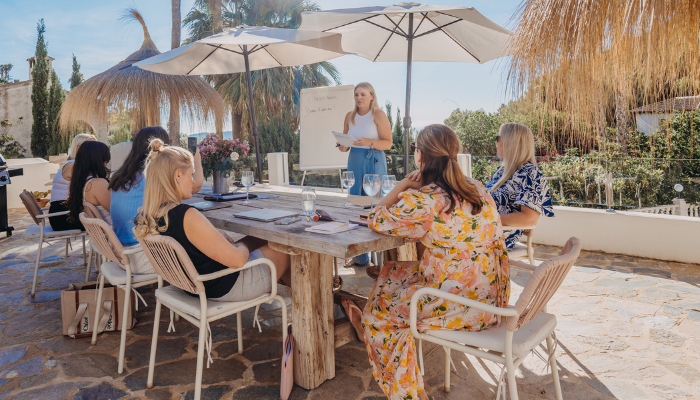
Some of the best conversations I’ve ever had have happened around tables, over dinner, on walks, over coffee, or in those slightly scruffy in-between moments at events when people stop trying to sound impressive and start being really honest with themselves and the room.
That’s still important. It’s probably more important than ever.
But I do think the bar is rising.
Women running businesses aren’t short of places they could go, events they could attend, people they could learn from or rooms they could pay to be in. We’ve got endless online programmes, local networking groups, retreats, masterminds, founder events, strategy days and communities popping up all over the place.
So the reason for gathering has to be clearer.
A beautiful venue is lovely. Good food matters, obviously, this will always be one of my favourite parts. The right people in the room matters too. But I think women are starting to ask a more commercial question now, even if they’re not saying it out loud:
“What will this actually do for me after I leave the room?”
That question changes everything.
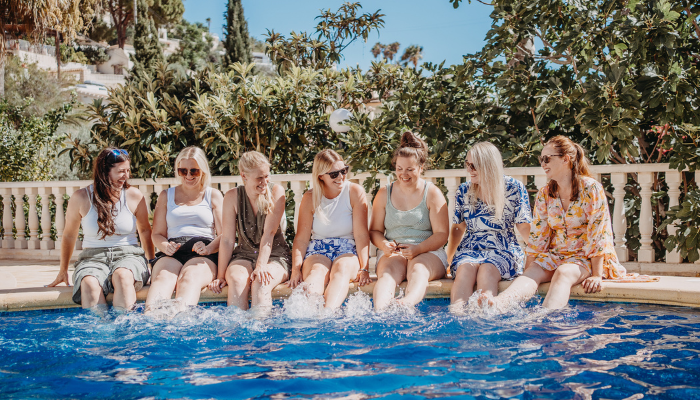
Because if you’re hosting a female founder retreat, a women in business retreat, a one-day strategy retreat or any kind of in-person business experience, the venue can’t be the whole proposition. The villa, the view, the interiors, the grazing table, the sunshine and the lovely welcome drinks can support the experience, but they can’t be the reason the offer exists.
The room needs a point that goes beyond being lovely.
That doesn’t mean every female founder retreat needs to become intense, corporate or packed with back-to-back workshops. I’d hate that. Corporate Kate hung up her navy dress a long time ago after crying on the phone to HR at three months pregnant while quitting her job in wealth management, but that’s a story for another day!
Space still matters. Time out matters. Proper conversations matter. Being away from the noise of your normal life and business can create a kind of clarity that’s very hard to access when you’re at home with your inbox open, Slack pinging and someone asking what’s for dinner.
But the space needs to lead somewhere.
That’s what I keep coming back to in my own work, whether I’m hosting my own business retreats in Spain, developing new retreat formats, or helping other business owners create profitable retreat offers of their own.
What is the point of the room?
Why this format?
Why would someone take time away from their business, their family, their clients and their normal life to be there?
And, from a business perspective, does the offer actually make sense?
Because retreats and events are wonderful, but they’re still commercial offers. They need demand, positioning and pricing that makes sense. They need to sit inside a business in a way that strengthens it, rather than becoming something expensive and exhausting to maintain.
This is the part that often gets missed in the retreat industry.
People talk about the venue, the schedule, the guest experience, the food, the activities and the welcome gifts. All of that matters. Of course it does. Nobody wants to pay thousands of pounds to sleep badly, eat beige food and feel awkward for four days.
But when I’m working on retreat strategy with clients, we’re looking at the commercial foundations underneath the experience.
Who is this retreat actually for?
What does she already know, want, fear or feel frustrated by?
Why would she choose this retreat over another way of solving the same problem?
What does she need to believe before she books?
How many people need to book for the retreat to be profitable?
What happens if it sells out but the margin is awful?
Where does this retreat sit inside the wider business?
Is it a one-off event that takes over your entire year, or is it the start of a repeatable retreat revenue stream?
That’s the work. And I think this is why female founder retreats are becoming so interesting right now.
The women I speak to don’t just want “a nice few days away”. They want space, yes, but they also want movement. They want to come home clearer, braver, more decided, more connected to what they’re building and less tangled in the noise of it all.
For some women, that might mean finally making a decision about the next phase of their business. For others, it might mean realising the thing they thought they wanted is not actually what they want at all. Sometimes the most useful outcome of a retreat isn’t adding more to the plan, it’s admitting what needs to come off it.
That’s why I think the next phase of women’s business retreats will be less about selling an escape and more about creating a commercially useful environment.
Not cold. Not performative. Not “bring your laptop and optimise your funnel by lunchtime”.
Just useful in a way that respects the level of woman in the room.
Established women business owners don’t need beginner conversations dressed up beautifully. They don’t need another space where everyone says the same things about boundaries, confidence and visibility. They need rooms that understand the complexity of running a business and a life at the same time.
Because the thing that sits underneath so many of these conversations, whether we’re talking about retreats, business growth, pricing, teams, visibility or what comes next, is freedom.
Financial freedom.
Time freedom.
Freedom of choice.
Freedom to travel more, spend more time with your children, buy the house, leave the relationship, sell the business, get the botox, pay off the mortgage, take August off, or simply live a life that feels like yours rather than one you accidentally built around everyone else’s needs.
These are real examples from women I’ve worked with, by the way.
And this is where I think retreats can be incredibly powerful when they’re done properly.
A good retreat is not just a prettier version of a workshop. It’s not a holiday with a workbook. It’s not an excuse to gather people somewhere beautiful and hope the depth arrives by accident.
A good female founder retreat has a clear reason for existing. It knows who it’s for. It knows what kind of room it’s creating. It knows what conversations need to happen there. It has been priced properly. It has been positioned clearly. It has been built with the wider business model in mind.
And when that’s done well, the beauty, warmth and space are not separate from the commercial usefulness. They support it.
The dinner conversation matters because it creates the honesty that wouldn’t happen on a sales call.
The walk matters because sometimes someone says the real thing halfway up a hill, not when they’re staring at a worksheet.
The villa matters because environment changes how people feel, think and interact.
The quiet morning coffee matters because it might be the first time in months someone has heard their own thoughts clearly.
But all of that has to sit inside a retreat offer that makes commercial sense.
Otherwise, you’re left with something that looks beautiful from the outside but is incredibly hard to sell, exhausting to deliver and not actually profitable enough to repeat.
And I don’t think that’s what most women want.
The women I work with want retreats that strengthen their business, not become an expensive hobby. They want to create something that feels meaningful, generous and human, but also makes money and gives them more options.
That’s the bit I’m interested in.
Female founder retreats, women’s business retreats and in-person strategy experiences are not going anywhere. If anything, I think they’re becoming more relevant as more of us question what we’re building, how we want to work and what we actually want our businesses to make possible.
But the standard is changing.
It’s no longer enough for the room to be beautiful. The room needs a reason. The offer needs commercial foundations. The retreat needs to answer the question your future guest is already asking:
“What will actually be different after this?”
That’s where the next wave of women’s business experiences is going, I think.
Towards rooms that are warm, thoughtful and genuinely useful. Rooms where women can have the honest conversations, make the strategic decisions and come home with more than a camera roll full of nice photos.
And honestly, I reckon we can have both.
The beauty and the business.
The space and the strategy.
The good food and the proper commercial point.
That’s the kind of room I want to be in, and it’s the kind of room I’m interested in helping more women create.
Come plan your next chapter on the Mediterranean coast. 🌞